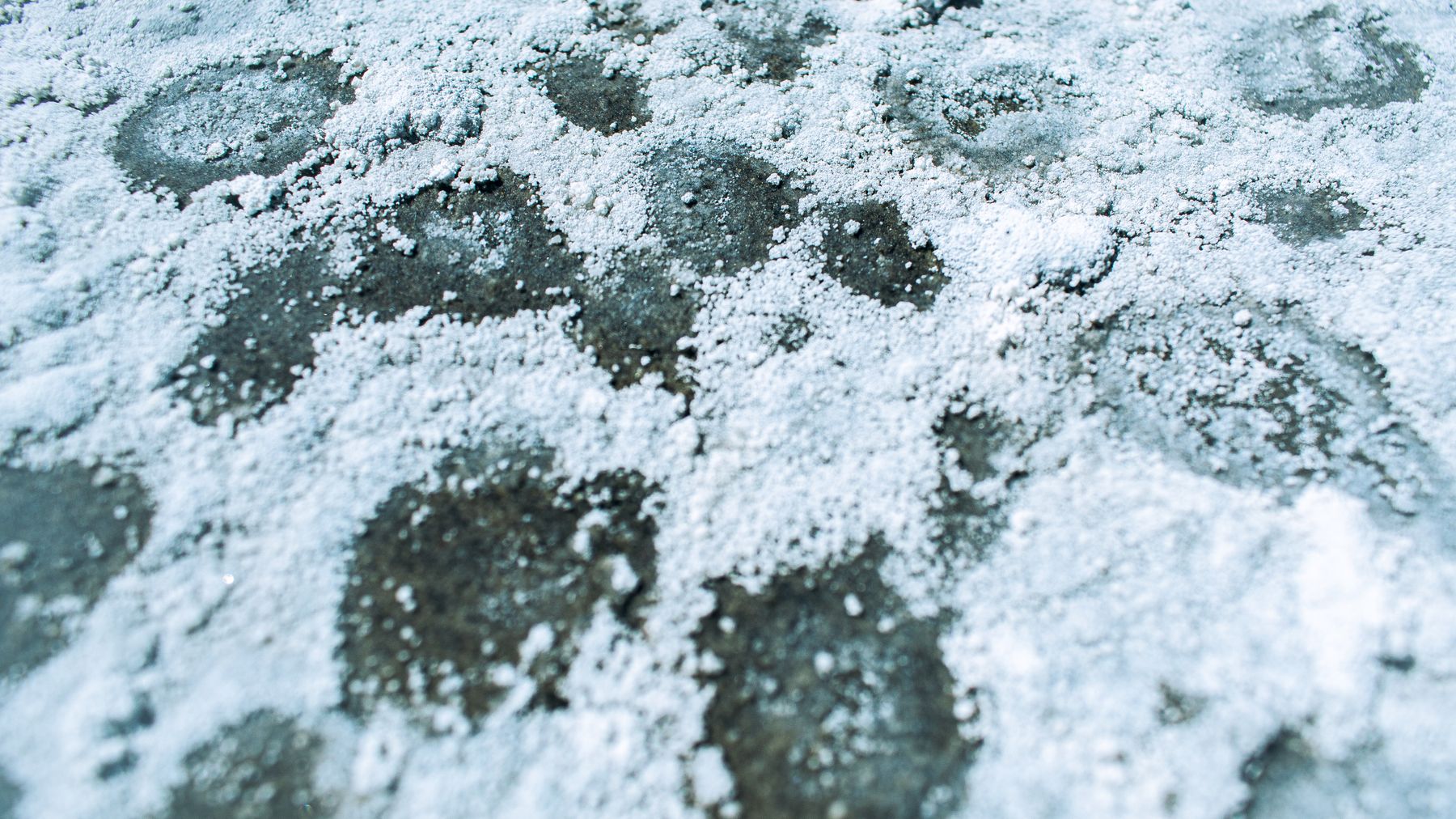
Bali sea salt flakes are light, crisp crystals grown from the seawater of Amed, East Bali, and they are the salt to buy when you want an audible crunch on a finished dish — a louder, drier texture than fleur de sel that stands up to steak, roasted vegetables, baked goods, and chocolate. This page explains how the flakes are formed, how they differ from other Bali salts, which dishes they suit best, and the formats available for home cooks and professional kitchens ordering online with worldwide delivery.
What Are Bali Sea Salt Flakes?
Flake salt crystals grow into thin, hollow, pyramid-like shapes as brine evaporates, and that geometry is the whole point: a large surface area with very little mass, so each flake shatters between the teeth and dissolves in a quick, bright burst. The brine begins the same way as all our salts, with seawater drawn from the Lombok Strait and concentrated under the tropical sun, but the flake stage is managed for slower, shallower crystallization that encourages wide, delicate structures instead of dense grains. The finished flakes are dried to a crisp, low-moisture state, which is what separates their texture from the tender dampness of fleur de sel.
How Do Flakes Differ from Fleur de Sel?
Fleur de sel holds residual moisture of several percent, while finished flakes are dried until brittle, and that single difference drives everything cooks notice on the plate.
| Property | Sea Salt Flakes | Fleur de Sel |
|---|---|---|
| Crystal shape | Thin pyramids and shards | Small irregular grains |
| Moisture | Dry and brittle | Slightly damp |
| Crunch | Loud, shattering | Gentle, brief |
| Dissolve speed | Fast, bright burst | Slow, soft release |
| Best on | Steak, roasts, baking, chocolate | Crudo, eggs, desserts, delicate plates |
Most serious kitchens keep both: flakes where texture should announce itself, and the softer crystal described on our bali gourmet fleur de sel page where subtlety wins. If you are choosing a first jar, pick by the food you cook most often rather than by category prestige.
Where Do Flakes Perform Best in the Kitchen?
A pinch of flakes weighs almost nothing — the hollow crystals are mostly air — so a little coverage goes a long way and a jar lasts longer than its weight suggests. Reach for flakes on:
- Seared and grilled meats, where the crackle contrasts with rendered fat
- Roasted vegetables, especially potatoes, pumpkin, and brassicas straight from the oven
- Chocolate chip cookies, brownies, and focaccia, pressed on just before baking
- Chocolate bars and salted caramel, where visible crystals signal craft
- Avocado toast, tomatoes, and grain bowls that need lift without wet seasoning
- Cocktail garnishes and rims where a dry, sparkling crystal is required
Because the flakes are dry, they also crush easily between the fingers, letting a cook scale the crystal size from dramatic shards down to a fine sprinkle with no tools.
Formats for Home Cooks and Professional Kitchens
Flakes are offered in a retail jar and pouch for home use, and in 1 kg and larger foodservice packs for kitchens that finish high volumes of covers each service. Restaurants often pair a flake pack with the fleur de sel chef pack so both textures are at the pass; the full professional range, including multi-salt bundles, is laid out on the bali gourmet salt flakes collection page. Every format ships internationally with tracking, and mixed orders are consolidated into one parcel to keep freight efficient.
Why Does Origin Matter for a Flake Salt?
Amed’s salt-making tradition is built on hollowed palm-trunk troughs called palungan, in which seawater concentrates under sun and wind before crystallization, and starting from that naturally mineral-rich brine gives the flakes trace elements such as magnesium, calcium, and potassium alongside sodium chloride. Industrial flake salts are typically produced from purified brine in closed vacuum evaporators, which yields uniform crystals but strips away origin character. Bali flakes sit in the artisanal camp: small-batch, sun-begun, and tied to a specific coastline, which is exactly the story gourmet retailers and chefs want behind a visible finishing crystal. The full journey from seawater to jar is documented on our salt-making process page.
How Should You Store Salt Flakes?
Salt is hygroscopic, and thin flakes expose far more surface to humid air than dense grains, so the storage rule is simple: an airtight jar, kept away from stove steam, with a dry spoon or dry fingers only. Stored this way the flakes keep their crispness indefinitely in practical terms; there is no spoilage mechanism in pure salt. If a jar is left open in tropical humidity and the flakes soften, a few minutes spread on a tray in a low oven restores full crunch without affecting flavor.
Frequently Asked Questions
Are sea salt flakes better than fleur de sel?
Neither is better; they are different tools. Flakes are dry, brittle pyramids that deliver a loud crunch and fast flavor burst, ideal for steak, roasts, and baking. Fleur de sel is moister and finer, with a gentle texture suited to delicate dishes and desserts. Kitchens that care about finishing usually keep both and choose by dish, not by ranking.
Can I bake with Bali sea salt flakes?
Yes, flakes are one of the best salts for baking applications where crystals should survive the oven visibly: pressed onto cookie dough, focaccia, pretzels, and brownie batter just before baking. Their low moisture prevents them from dissolving into the surface, so they emerge intact and glittering. For dissolved seasoning inside a dough, use fine sea salt instead.
How much do I need per dish?
Because flake crystals are hollow and mostly air, a visible pinch weighs a fraction of a gram, and two or three pinches finish a family-sized dish. A standard retail jar therefore covers months of regular home use. Professional kitchens portioning across a full service typically plan in single grams per station per night rather than tens of grams.
Do the flakes contain additives or anti-caking agents?
No. The flakes are produced from evaporated seawater and nothing else, with no anti-caking agents, bleaching, or iodine fortification added. Keeping the product single-ingredient preserves the trace minerals carried in the original brine and the clean label that gourmet retailers and chefs expect from an artisanal finishing salt.
Order Bali Sea Salt Flakes
Tell us your format and destination and we will confirm stock from the current harvest with a written quote and shipping options. Message us on WhatsApp at wa.me/6281139414563 or email [email protected].