Patience For Crystal Formation
The crystals are allowed to form at their own pace on the surface of the pond, which is what produces the delicate, irregular structure that defines fleur de sel.
The Salt-Making Process
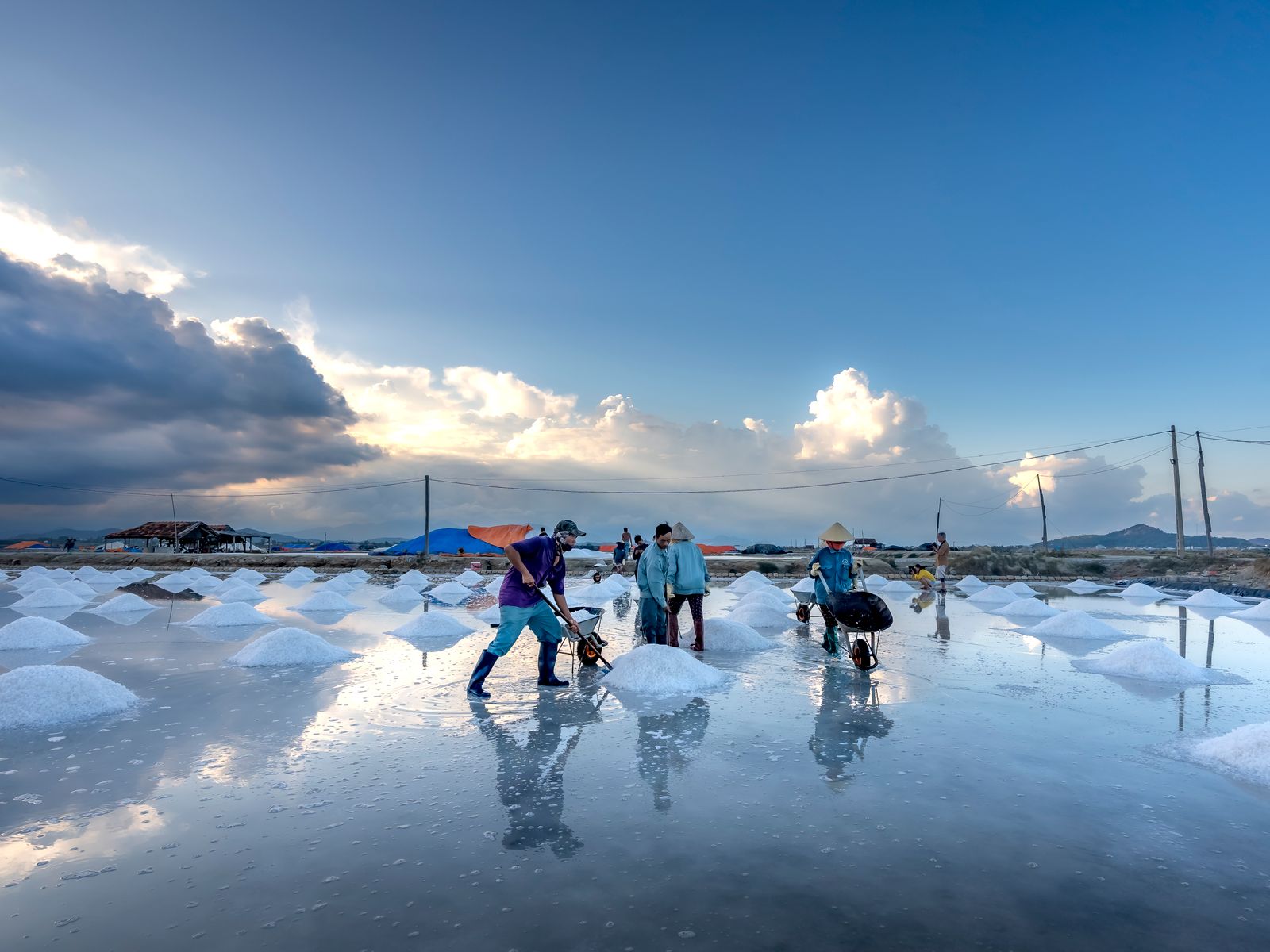
The salt makers of Amed wake before dawn. They have done this for generations — some for a lifetime, some for 40 years, some for 60 years.
In short
This is not industrial food production. This is craft. This is tradition refined across 150 years into an art form that produces the world's finest sea salt.
Amed, Karangasem — northeast coast of Bali
Geography, Climate & Terroir
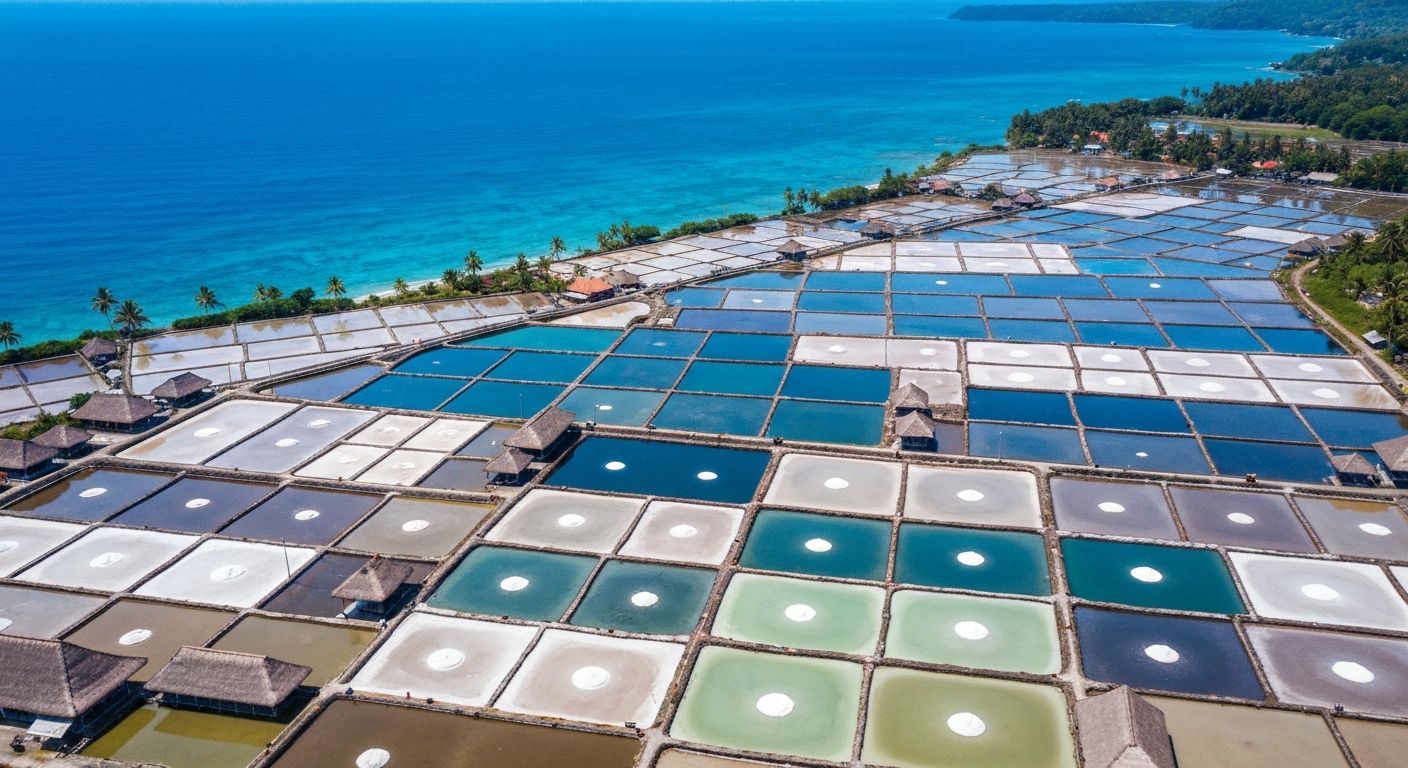
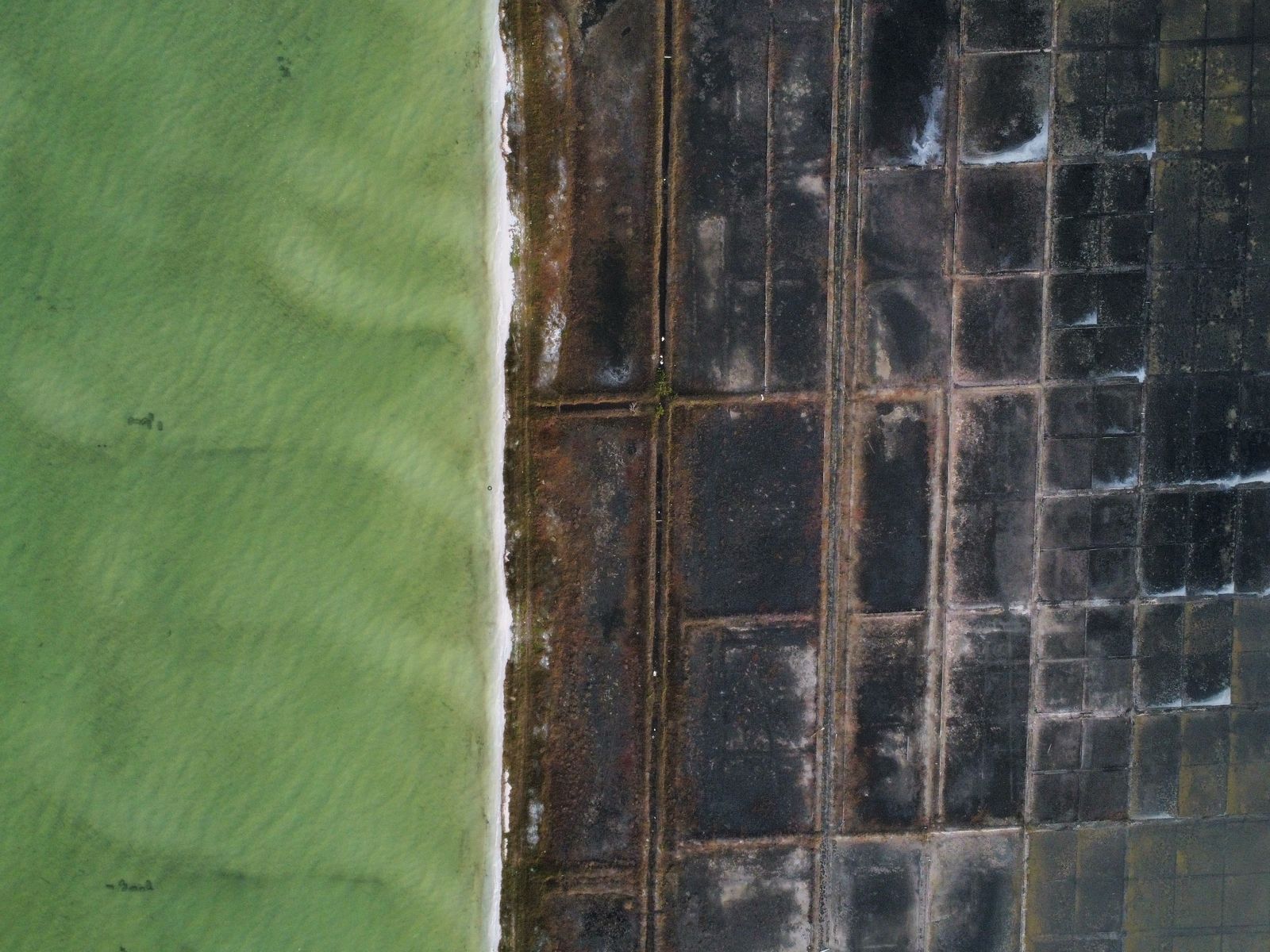
Amed sits on the northeast coast of Bali, where volcanic shores meet the Indian Ocean, with salt fields carved out for 150 years.
The waters are pristine, uncontaminated by major industrial activity or pollution, and mineral-rich, shaped by Indian Ocean currents.
Bali's equatorial climate provides consistent sun — absolutely essential for salt production — and the trade winds are reliable. The best salt-making happens in the dry season, approximately April through September in Bali.
“Dry-season salt has a different crystalline structure — more perfect, more mineral-rich — than wet-season salt.”
The Harvesting Process
Eight stages, each one dictated by sun, wind and the judgment of a salt maker who has done this since childhood.
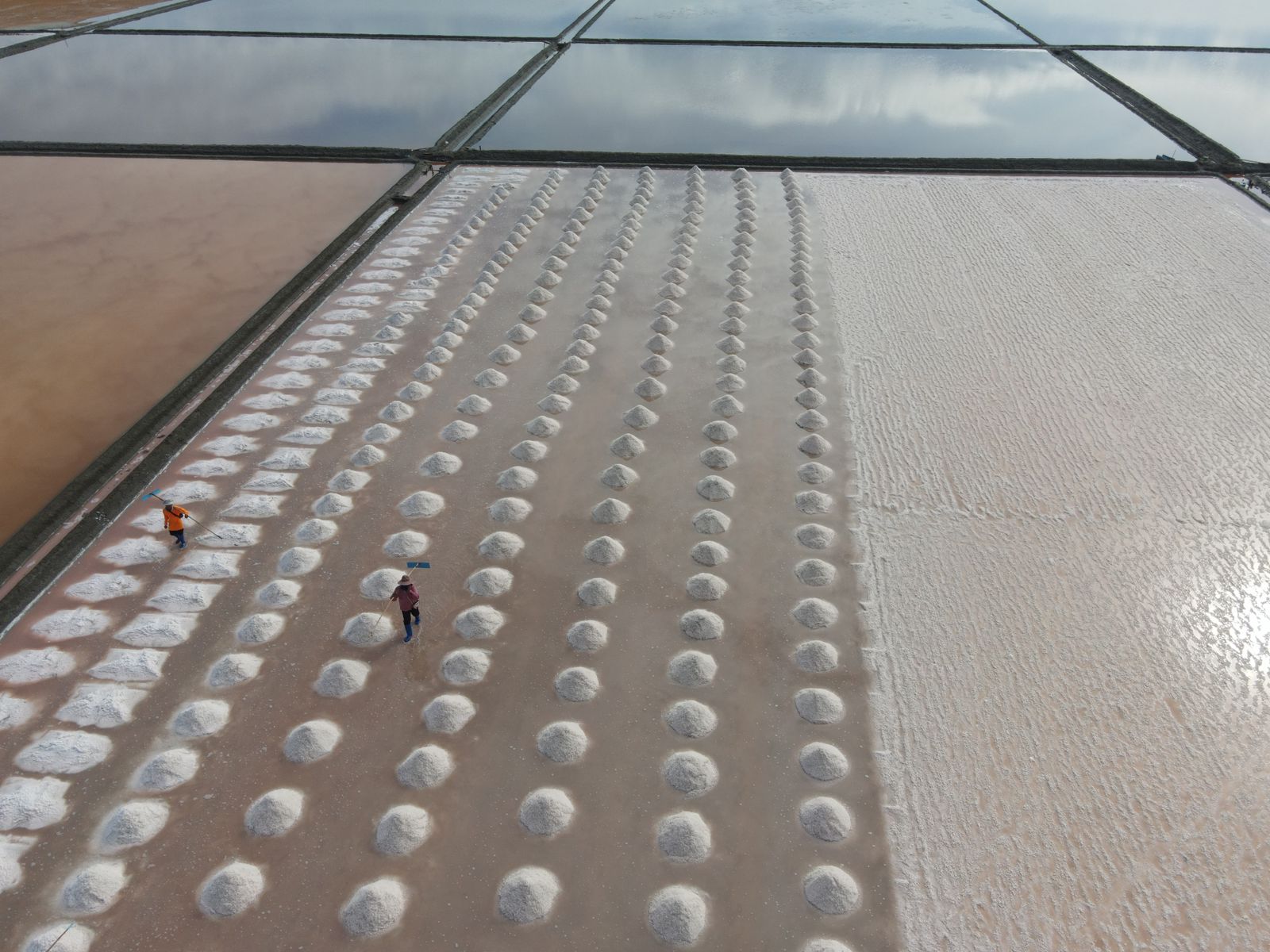
Water flows through channels carved over decades into the coastal flats, settling in large holding ponds where the first stage of evaporation begins. This stage is about volume.
In the primary ponds, seawater sits relatively undisturbed. The Bali sun does its work. Water evaporates. Minerals concentrate.
Water is channeled into secondary ponds — smaller, shallower basins where the final evaporation happens.
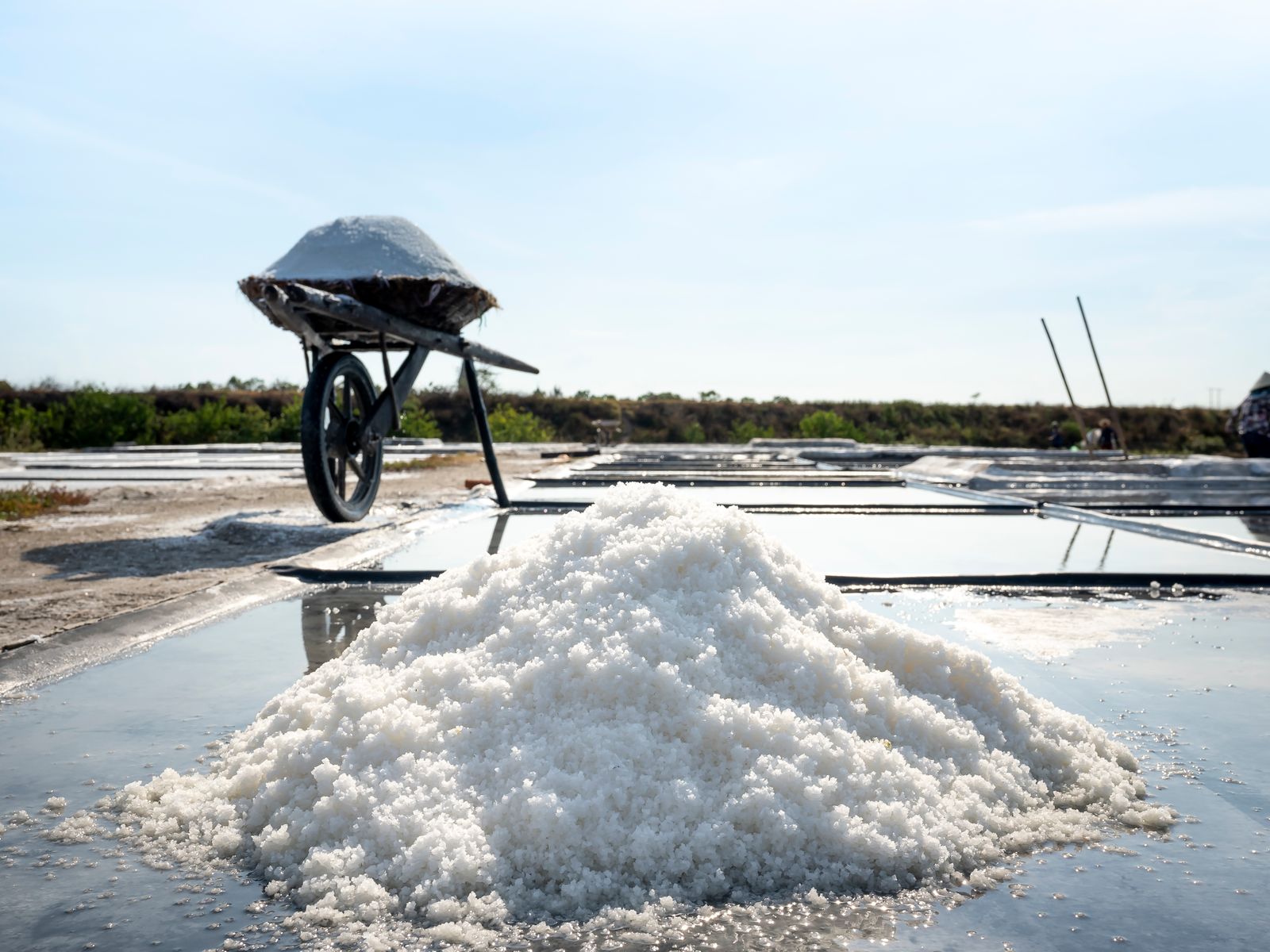
The finest, most delicate crystals form first. They float on the surface of the remaining liquid, creating a layer of pristine white crystalline fleur de sel.
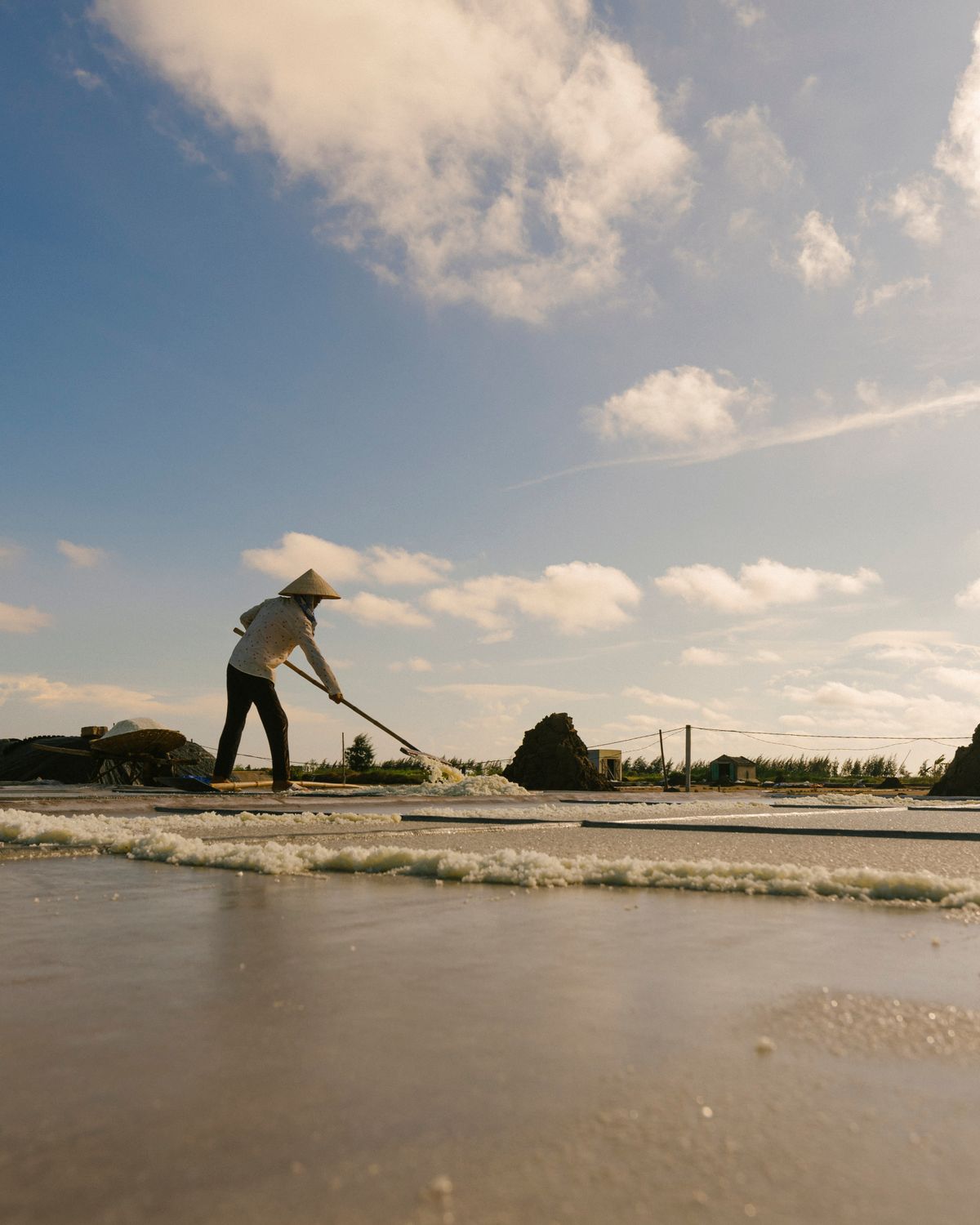
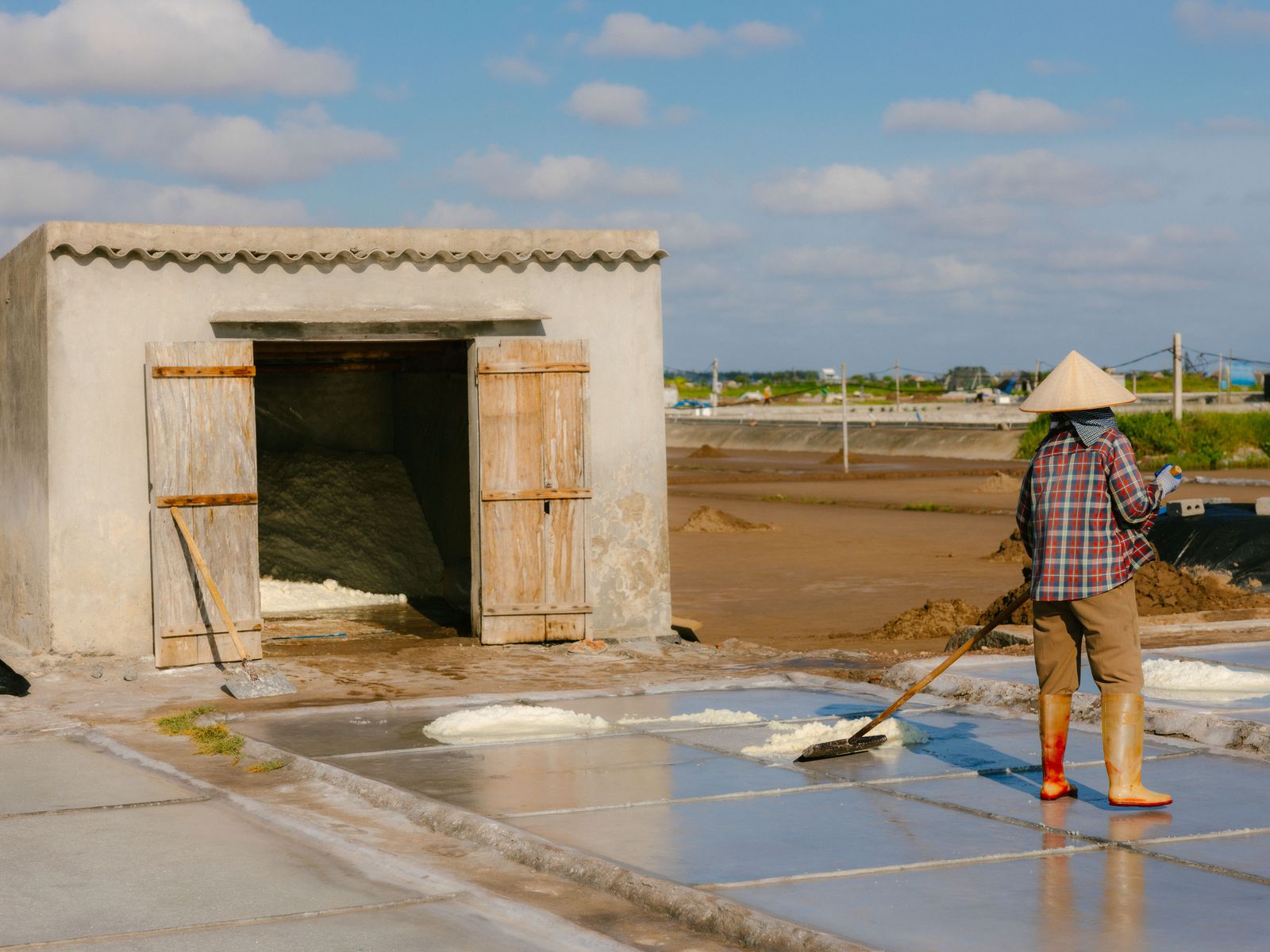
Before dawn the salt maker goes to the crystallization pond using a traditional wooden tool refined across 150 years of use. A master salt maker might harvest only 10–20 kilograms of fleur de sel in a morning. Dawn matters because humidity is highest in the early morning and the sun has not yet heated the air.
Harvested fleur de sel is spread in thin layers, exposed to air and gentle sunlight, allowing residual moisture to evaporate naturally.
The dried fleur de sel is then carefully hand-sorted. Any larger crystals or debris are removed.
The final fleur de sel is weighed and packaged in glass or premium containers, sealed to prevent moisture absorption.
Industrial salt production might extract 30 kilograms from the same seawater, but it would be different salt entirely — processed, refined, less complex.
Why Traditional Methods Produce Superior Salt
The crystals are allowed to form at their own pace on the surface of the pond, which is what produces the delicate, irregular structure that defines fleur de sel.
Zero chemicals. The seawater evaporates naturally. Nothing is added at any stage.
Consistency comes from decades of refined judgment rather than from machinery — a salt maker knows by sight and touch what salt will be exceptional.
Skimming by hand preserves the fragile surface crystal instead of crushing it, which is exactly the quality customers pay for.
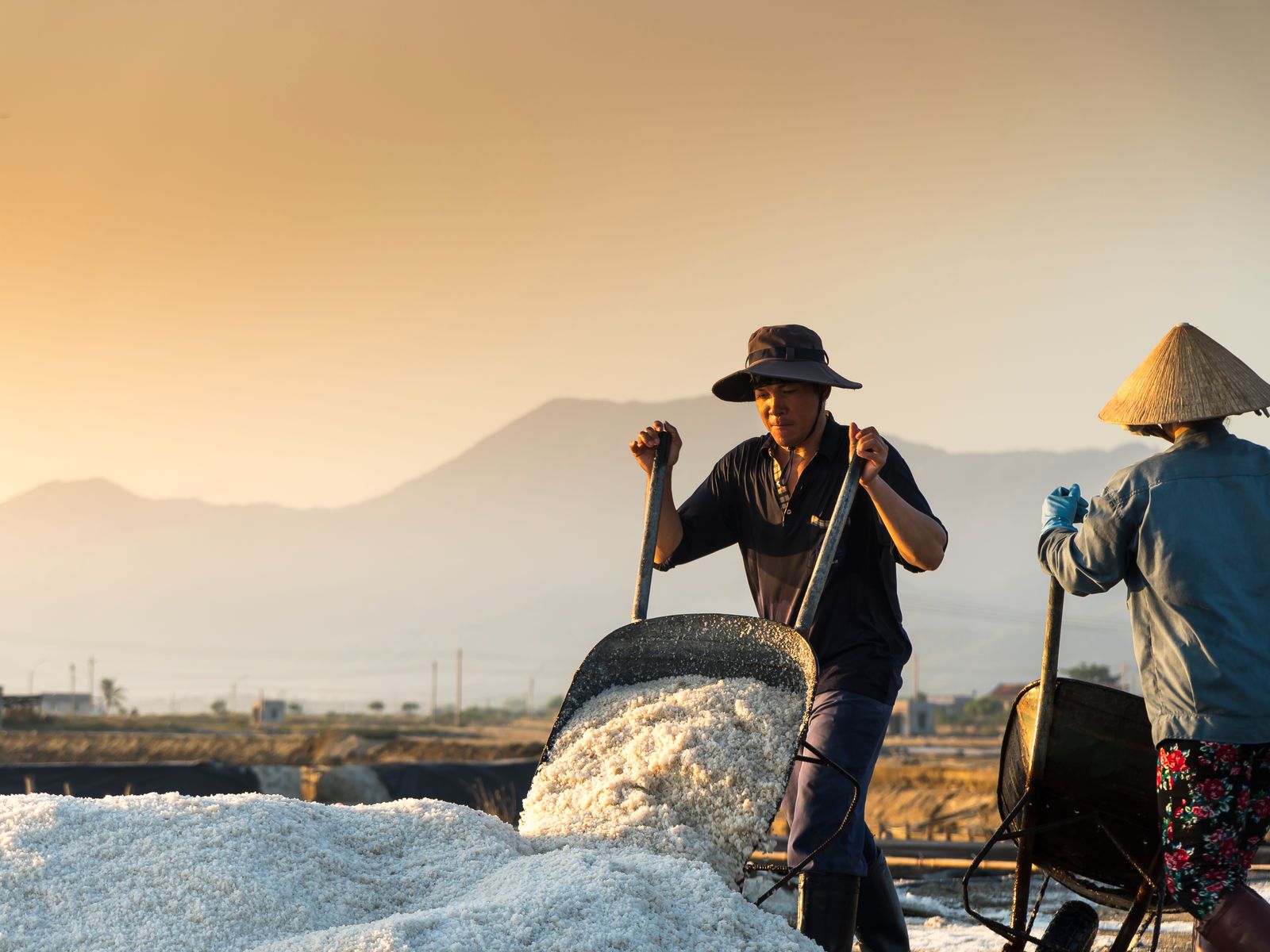
Many are in their 50s, 60s, or even 70s — which means they have been harvesting salt since childhood. Our commitment through Juara Holding Group includes fair compensation, safe working conditions, education for their children, healthcare access, and long-term security.
Zero chemical input, natural evaporation, land enhancement, water stewardship, community-based production, and a reduced carbon footprint.
Quality Standards & Verification
Approximately 1,000 kilograms of seawater produces roughly 25–30 kilograms of fleur de sel.
The Salt Fields
Upload photographs of the fields, the troughs and the harvest here. The band stays hidden until at least one image is added.
FAQ
Related
Witness It
Our immersive tours take you into the historic salt fields of Amed to watch the sunrise harvest and meet the makers themselves.