Organic Bali Fleur de Sel Artisanal Harvest

Organic Bali fleur de sel is harvested with nothing but seawater, sun, and hand tools: no additives, no anti-caking agents, no bleaching, and no chemical processing at any stage from ocean to jar. This page explains what “organic” honestly means for a mineral product like salt, how our artisanal harvest works on the East Bali coast, and what documentation conscious buyers can request before ordering for their home, shop, or kitchen.

What Does Organic Actually Mean for Sea Salt?

Salt is a mineral, not an agricultural crop, which is why the major government organic programs built around farming do not certify salt the way they certify vegetables or coffee. That surprises many buyers, and it is worth stating plainly because sellers who slap an unqualified organic logo on salt are often trading on confusion. What a careful salt producer can honestly demonstrate is process purity: seawater drawn from a clean coastal zone, evaporation driven only by sun and wind, harvesting done by hand, and zero substances added at any point. That is the standard our artisanal harvest is run to, and it is the standard we invite buyers to question us on. When we use the word organic, we mean the method — a single-ingredient product handled without chemical intervention — and we would rather explain that honestly than hide behind a vague label.

How Is the Artisanal Harvest Done?

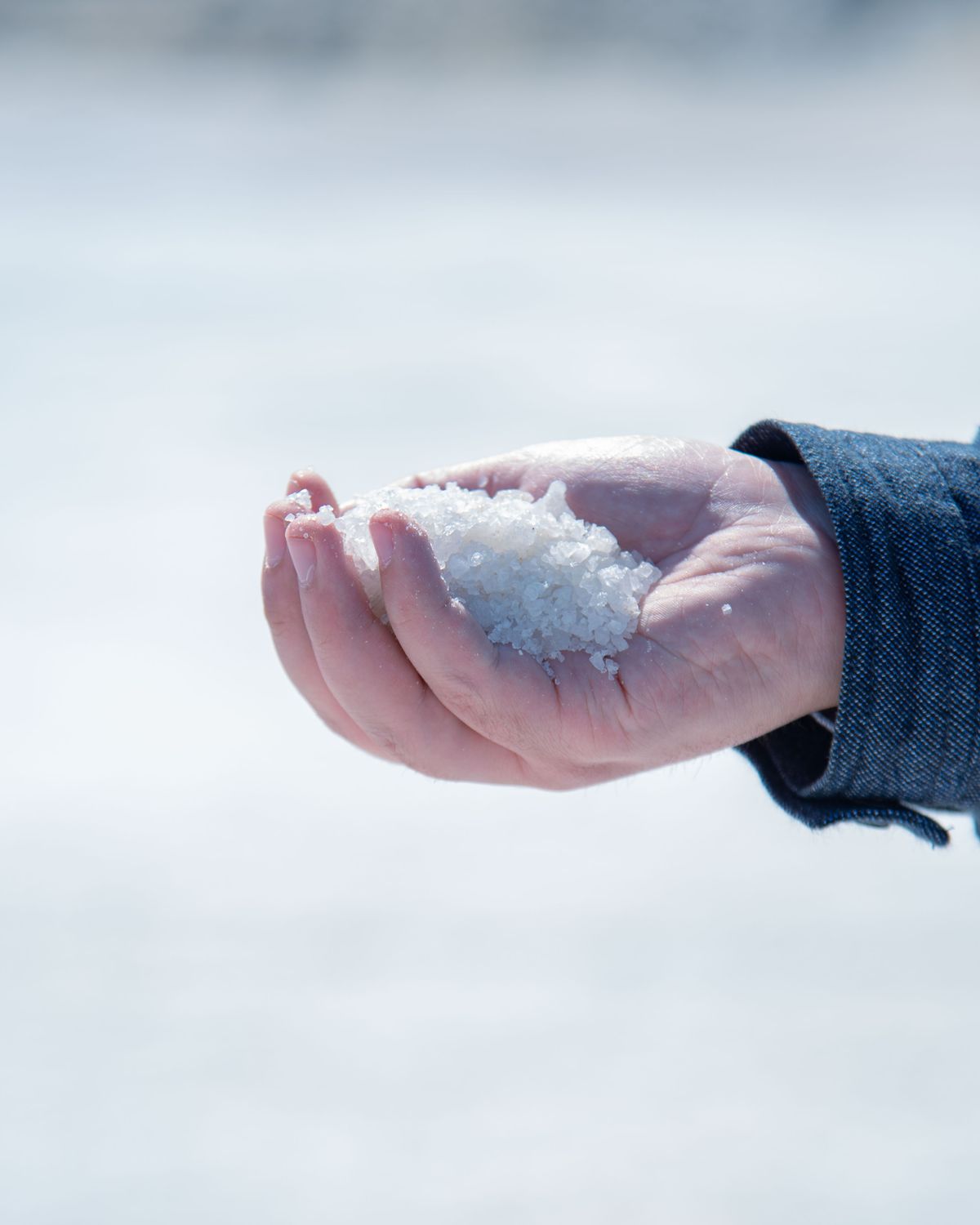
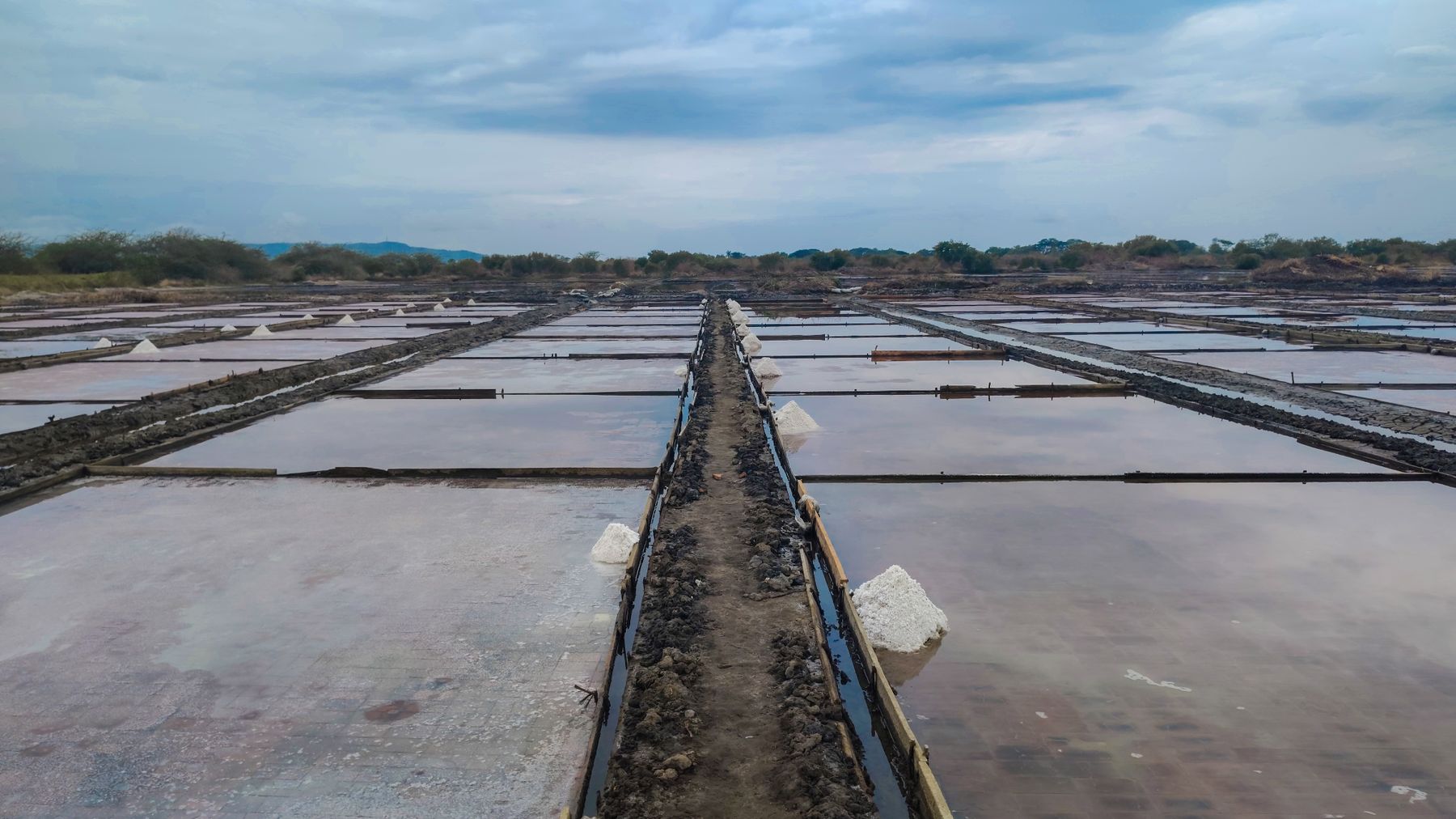
Fleur de sel forms as a thin crystal film on the surface of shallow evaporation beds, and it must be skimmed by hand before wind or rain sinks it back into the brine. On the East Bali coast, salt makers work their beds in the dry hours of the day, drawing seawater, letting the tropical sun concentrate it, and then skimming the delicate surface crust with flat hand tools in slow, shallow passes. Nothing mechanical touches the crystals. The skimmed salt is drained, sorted, and packed without milling, washing agents, or heat drying, which is why the finished crystals keep their irregular shape and natural moisture. The full step-by-step is documented on our salt-making process page, and visitors who want to see the beds in person can read about our salt-making tours.

What Is Actually in the Salt?

The ingredient list has exactly one entry: sea salt. Because the crystals are never refined, they retain the trace minerals naturally present in seawater, including magnesium and calcium compounds, which contribute to the softer, rounder salinity that distinguishes fleur de sel from refined table salt. Just as important is what is absent:

  • No anti-caking agents such as silicon dioxide or ferrocyanide compounds.
  • No added iodine, fluoride, or fortification of any kind.
  • No bleaching or whitening treatment; the color is the natural off-white of surface-harvested crystals.
  • No flow additives, carriers, or blending with salt from other origins.
  • No plastic-lined bulk handling between harvest and packing; the salt moves in food-grade containers.

For buyers comparing products, this absence list is often more revealing than any front-of-label claim, because additives are where most commodity salts quietly diverge from artisanal ones.

Who Buys the Artisanal Harvest?

Three groups make up most of the demand for this harvest: health-conscious home cooks replacing refined table salt, chefs who want a clean-label finishing salt they can name on a menu, and retailers building a natural-foods shelf that can survive an ingredient-literate customer’s scrutiny. Home buyers usually start with the 100g gourmet jar, which is the same harvest in retail format. Shops, delis, and larger kitchens tend to move to bulk formats or trade terms through the wholesale program, where volume pricing applies and packing can be adapted. Whichever door you enter through, the salt is the same: one origin, one method, one ingredient.

Can You Verify the Sourcing Before You Buy?

Yes, and we encourage it: every batch we pack is traceable to a harvest window and a specific stretch of coastal beds. Buyers who need paperwork for retail compliance or import can request our current product specification sheet, which covers origin, harvest method, handling, and packing details, before committing to an order. We would rather send documents up front than have a shipment sit in questions later. If your market has specific labeling rules for salt — several countries regulate how salt may be described on packaging — tell us where you sell and we will confirm what our documentation does and does not cover, so you can check the remaining requirements with your local authority.

Sustainability of the Harvest

Hand-skimming is one of the lowest-impact forms of salt production in existence: the inputs are seawater and sunlight, and the tools are hand-held. There is no fuel-burning evaporation, no mining, and no brine discharge beyond what the tide already carries. Supporting this harvest also supports the continuation of a traditional coastal livelihood in East Bali that competes against cheap industrial salt. Our commitments to the salt-making families and the coastline they work are described in detail on the sustainability and community page, and we consider that page part of the product: buyers of an artisanal harvest deserve to know whose hands did the harvesting.

Frequently Asked Questions

Is salt ever officially certified organic?

Mainstream agricultural organic programs generally exclude salt because it is a mineral, not a farmed crop, so a government organic seal of the kind you see on produce usually cannot apply. Some private standards bodies assess salts for organic-compatible processing instead. The honest questions to ask any seller are about method: what was added, how it was harvested, and whether documentation is available.

What makes this harvest “artisanal” rather than industrial?

Scale and touch. Industrial salt is produced in vast mechanized ponds or mines and refined in processing plants. This fleur de sel is skimmed by hand from small coastal beds in East Bali, in batches limited by weather and daylight, then drained and packed without milling or heat drying. Every kilogram passed through human hands, which is why supply follows the harvest calendar rather than a factory schedule.

Does unrefined salt taste different from refined salt?

Noticeably. Refined table salt is nearly pure sodium chloride, often with anti-caking agents and added iodine, and it delivers a flat, sharp saltiness. Unrefined fleur de sel retains seawater’s trace minerals, including magnesium and calcium compounds, which round the flavor and remove the bitter edge. The moist, irregular crystals also dissolve gradually on food, giving texture that refined granules cannot.

Can shops stock this as part of a natural-foods range?

Yes, that is one of its most common retail placements. The single-ingredient label, absence of additives, and documented hand harvest fit natural-foods and clean-label shelves well. Retailers order through our wholesale program, which covers volume pricing and retail-ready packaging, and we supply a product specification sheet so your team can answer customer questions about origin and method accurately.

Talk to Us About the Artisanal Harvest

Whether you want one jar for your kitchen or documented supply for your shelves, start the conversation and we will answer plainly. Message us on WhatsApp at https://wa.me/6281139414563 or email [email protected] for availability from the current harvest.

Scroll to Top